Story 3: Poverty & Economic Growth
2026-04-13
Chapter 1 SDG Overview
What is the history of SDGs? What is even SDG?
1.1 History
SDG history goes beyond 2015. In the year 1987, the SDG’s intellectual foundation was build by the Brundland Commission known as “Our Common Future”. This essentially meant we must move towards development without destroying that option for our future generations. This framing was extremely crucial as it meant that economic growth pursued without environmental and sustainable accountability is not growth at all. It is borrowed from the future.
In 1992, at the Earth Summit in Rio de Janeiro, more than 178 countries accepted the “Agenda 21”, a comprehensive plan to build global parternship for sustainable development to improve human lives and protect the environment. However, Agenda 21 was not could not be implemented properly because it didn’t have binding enforcement and there was a lack of follow through.
In the year 2000, the world sat down again. The failures were too much for them to not do anything. In September 2000, 189 countries came together to implement the historical MDGs(Millenium Development Goals). The following are the eight Millennium Development Goals:
- to eliminate extreme poverty and hunger;
- to achieve global primary education;
- to empower women and promote gender equality;
- to reduce child mortality;
- to promote maternal health;
- to fight malaria, HIV/AIDS, and other diseases;
- to promote environmental sustainability; and
- to develop a universal partnership for development.
This was an extremely ambitious move but had major flaws. The MDGs focused exclusively on developing countries and treated economic growth, sustainable development as a different workstream rather than a unified goal towards a better world.
Thus, after 12 years of MDGs, the UN conference on Sustainable development declared the adoption of “The Future We Want” and started transforming MDGs to SDGs.
The concept of SDGs were originally proposed by Colombia focusing on environmental sustainability with economic growth and thinking about them as a universal set of goals. This time, environmental sustainability instead of being a single goal was a stream that goes through all of the other goals.
In 2013, the general assembly formed a group of 30 members to come up with the SDGs. On September 25th, 2015, 193 countries of the UN general assembly adopted “Transforming the World: the 2030 agenda for sustainable development” in UN Sustainable Development Summit in Newyork, USA. The SDGs were born, 17 goals and 168 targets.
1.2 What are the SDGs?
The 17 Sustainable Development Goals are organized around what the 2030 Agenda calls the “5 Ps”: People, Planet, Prosperity, Peace, and Partnership. The goals are:
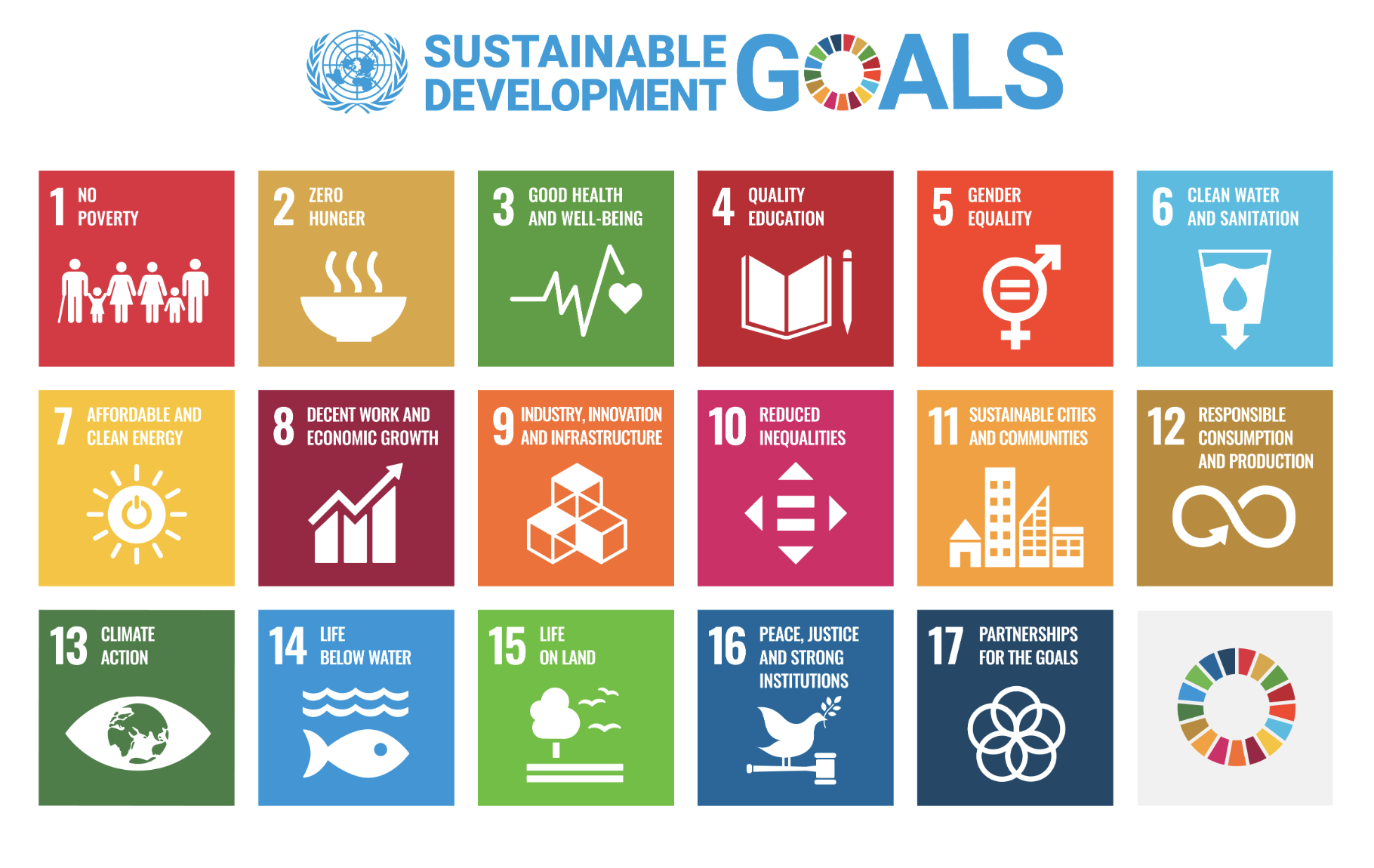
Unlike the MDGs, the SDGs apply universally to all countries, developed and developing alike. Germany and Ghana. The United States and Uganda. All measured against the same compass. The goals are also explicitly interdependent. Progress on SDG 8 (decent work) accelerates progress on SDG 1 (no poverty). Climate inaction under SDG 13 reverses gains in SDG 2 (zero hunger). The SDGs are not a checklist. They are a system.